Kayden's Law Promises Protection—But Pennsylvania's Custody Courts are Still Catching Up
A new custody law aims to protect children at risk of abuse, but uneven implementation across Pennsylvania’s courts leaves parents navigating uncertainty.
December 16th, 2025
By Kerith Strano Taylor
A Law Born of Tragedy
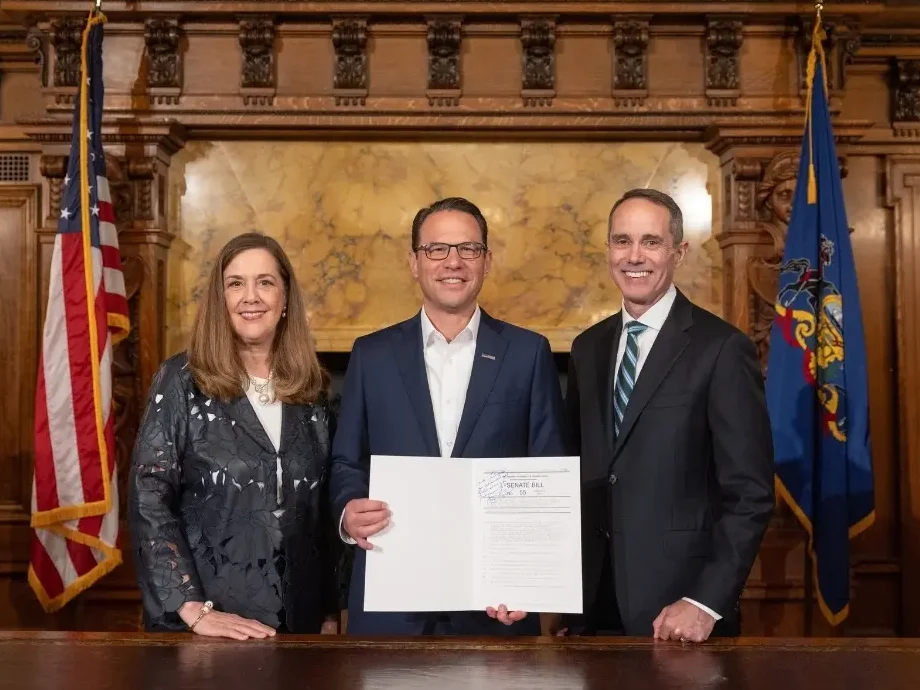
Kayden’s Law was signed into law by Governor Shapiro on April 15, 2024, and took effect on August 15, 2024. Named after 7-year-old Kayden Mancuso who was tragically murdered by her father, Jeffrey Mancuso, during an unsupervised visitation in 2018.
Kayden’s murder highlighted a critical gap in Pennsylvania custody law. At the time, a parent could present proof of the other parent’s criminal history, past protection-from-abuse orders and violent behavior, yet still be unable to obtain supervision of the violent parent’s custodial time.
Kayden’s story is not an isolated tragedy. It is one of many instances in which a parent tried to protect their children from a parent who had been violent during the relationship, only to suffer the loss of those children at the hands of the other parent. [1]
What the Law Changes
Kayden’s Law makes a number of changes intended to close the gap for litigants who allege that their children are at risk of abuse [2] while in the care of the other parent. The law expands the list of criminal offenses that must be reported to the Court at the outset of a custody case and updated as litigation continues or circumstances change.
The law also creates a presumption of supervised custodial time for parents who have been found to have a history of abuse of a child or a household member by a party or if there is a present risk of harm to the child or an abused party. If custodial time is awarded under those circumstances, the Court is expected to detail in the custody order the following factors:
- (i) The safety conditions, restrictions or safeguards as reasonably necessary to protect the child or the abused party.
- (ii) The reason for imposing the safety conditions, restrictions or safeguards, including an explanation why the safety conditions, restrictions or safeguards are in the best interest of the child or the abused party.
- (iii) The reasons why unsupervised physical custody is in the best interest of the child if the court finds that past abuse was committed by a party.
- (2) If supervised contact is ordered, there shall be a review of the risk of harm and need for continued supervision upon petition of the party. The safety conditions, restrictions or safeguards may include any of the following:
- (i) Nonprofessional supervised physical custody.
- (ii) Professional supervised physical custody.
- (iii) Limitations on the time of day that physical custody is permitted or on the number of hours of physical custody and the maximum number of hours of physical custody permitted per day or per week.
- (iv) The appointment of a qualified professional specializing in programming relating to the history of abuse or risk of harm to provide batterer's intervention and harm prevention programming. Batterer's intervention and harm prevention programming may include programming designed to rehabilitate the offending individual, including prioritizing a batterer's intervention and harm prevention program, if available, or the impacts of physical, sexual or domestic abuse on the victim. The court may order an evaluation by the appointed qualified professional under this paragraph to determine whether additional programming is necessary.
- (v) Limitations on legal custody.
- (vi) Any other safety condition, restriction or safeguard as necessary to ensure the safety of the child or to protect a household member.
- (e.1) Supervised physical custody.--If a court finds by a preponderance of the evidence that there is an ongoing risk of abuse of the child, there shall be a rebuttable presumption that the court shall only allow supervised physical custody between the child and the party who poses the risk of abuse. A court may find that an indicated report for physical or sexual abuse under Chapter 63 (relating to child protective services) is a basis for a finding of abuse under this subsection only after a de novo review of the circumstances leading to the indicated report. When awarding supervised physical custody under this subsection, the court shall favor professional supervised physical custody. The court may award nonprofessional supervised physical custody if:
- (1) the court determines that professional supervised physical custody is not available within a reasonable distance of the parties or the court determines that the party requiring supervised physical custody is unable to pay for the professional supervised physical custody; and
- (2) the court designates an adult to supervise the custodial visits who has appeared in person before the court, the individual executes an affidavit of accountability and the court makes finding, on the record, that the individual is capable of promoting the safety of the child.
A System Without a Uniform Process
Despite these changes, the process by which Kayden's Law is being implemented across Pennsylvania's 67 counties is far from clear.
Depending on the county in which the litigation is filed, the parties are expected to appear at the Court within weeks of filing or service of the initial custody complaint. Those early appearances are sometimes overseen by an officer of the Court, while in other counties the parties are expected to conference amongst themselves to determine whether an agreement can be reached.
When Safety Concerns Are Heard—And When They Are Not
There is no uniform system by which a party who is concerned with the safety of a child can seek an early assessment by the Court of the history disclosed in the Criminal Abuse/History Verification Report.
Some counties are holding initial hearings before the Court, prior to the conferences, to hear testimony regarding reported abuse and make preliminary findings regarding any concern raised by the parties. Other counties are not addressing these allegations until the case comes before the Court, which may be two or three steps later—and only if the parties fail to reach a negotiated agreement.
If a party is unaware that they have the right to be heard by the Court on their safety concerns before entering into a custody stipulation and consent order, they may make decisions they otherwise would not have made. That process is not clear to litigants who are representing themselves. Frankly, it is not clear at all.
What Remains Uncertain
The updated law gives litigants new tools to use and the Courts new factors to consider, but how those tools and factors are going to be applied by different Courts across different counties remains to be seen.
For families navigating custody disputes where safety is at stake, the difference betwen protection and tragedy may lie in timing, access, and the county courthouse where the case is filed. If safety is a factor in your child custody case, consulting with an attorney who practices family law is always wise—Information is power.
Whether Kaydens Law fulfills its promise may ultimately depend not on what the statute says, but on how—and how quickly—courts choose to apply it.
[1] https://www.usatoday.com/story/news/nation/2023/07/17/child-deaths-during-custody-battles/70383774007/
[2] Definition of Abuse, 23 PA CS 6102, https://www.palegis.us/statutes/consolidated/view-statute?txtType=HTM&ttl=23&div=0&chpt=61&sctn=2&subsctn=0
[1] 23 PA CS 5323(e) Award of Custody. https://www.palegis.us/statutes/consolidated/view-statute?txtType=HTM&ttl=23&div=0&chpt=53&sctn=23&subsctn=0